
Small Business Loans Explained: How to Find the Right Funding for Your Business

Need cash for payroll, inventory, equipment, or expansion?
Wondering which small business loans fit your goals, timeline, and credit profile?
You have options. The trick is matching the funding to the moment.
A smart loan can help you:
- Smooth a bumpy cash-flow season
- Stock up before a busy stretch
- Replace aging equipment
- Accept a larger customer order
- Hire help
- Open a new location
- Turn a promising idea into a practical next step
This guide breaks down the major funding options, what lenders review, and how to move toward capital with fewer surprises.
Keep momentum moving
Your credit score isn't your ceiling.
Qualify with as little as 4 months in business and no minimum FICO — compare offers from top financing partners and pick the terms that fit.
See My Real OptionsWhat are small business loans?
A small business loan gives your company access to capital that you repay over time. Depending on the product, repayment may happen daily, weekly, or monthly.
The cost typically includes:
- Principal: the amount borrowed
- Interest or factor cost
- Origination or administrative fees
- Potential collateral or personal guarantee requirements
Funding may arrive as:
- A one-time lump sum
- A reusable line of credit
- An advance against unpaid invoices
- Financing for a specific purchase, such as equipment or real estate
Before applying, get clear on three things:
- Purpose: What will the money accomplish?
- Amount: How much do you actually need?
- Timing: Can you wait several weeks, or do you need capital quickly?
Start there. Keep it crisp. Let the need lead.
Which type of business funding fits your goal?
Different funding products solve different problems. Choose the tool that matches the job.
Working capital loans: smooth the everyday
Need to cover payroll, rent, supplies, marketing, or a temporary revenue dip?
Working capital loans can provide a cash-flow bridge for ordinary operating expenses.
They may fit when you need to:
- Buy inventory before customer payments arrive
- Cover seasonal expenses
- Fund payroll during a slow receivables cycle
- Manage an unexpected repair
- Maintain momentum while revenue catches up
Working capital is practical, flexible, and focused on keeping the business moving.
Business lines of credit: keep a flexible cushion
A business line of credit lets you draw funds as needed, up to an approved limit. You generally pay based on what you use rather than the full available amount.
A line of credit may be useful for:
- Recurring inventory purchases
- Small repairs
- Short-term cash gaps
- Seasonal expenses
- Unpredictable opportunities
Think of it as a financial safety net with a little spring in its step: not a blank check.
Term loans: fund a defined project
A term loan provides a lump sum with a set repayment schedule.
It may work well for:
- Expansion
- Renovations
- A major marketing campaign
- A large one-time purchase
- Consolidating eligible business obligations
Match the repayment period to the useful life of what you’re funding. Short-term need? Avoid dragging it out. Long-term asset? A longer structure may create more breathing room.
Equipment financing: upgrade your tools
Need a delivery van, medical device, construction equipment, kitchen appliance, or specialized machinery?
Equipment financing is designed for business assets. The equipment itself may help support the financing structure, although requirements vary by lender.
Use it when the purchase can:
- Increase production
- Reduce operating costs
- Improve service quality
- Add a new revenue stream
- Replace an expensive or unreliable asset
Accounts receivable financing and factoring: unlock unpaid invoices
Do customers take 30, 60, or 90 days to pay?
Accounts receivable financing or factoring can help convert eligible invoices into working cash sooner. This may be useful for businesses that have reliable commercial customers but uneven payment timing.
It can support:
- Payroll
- Inventory
- Supplier payments
- Project costs
- Growth between invoice and payment dates
Review the fees carefully. Faster cash can be helpful, but the total cost must fit your margins.
SBA loans: explore structured, longer-term funding
SBA-backed loans are issued by participating lenders and partially guaranteed by the U.S. Small Business Administration. They may offer competitive terms for eligible companies.
The SBA identifies several programs, including:
- 7(a) loans: Broad business purposes
- 504 loans: Long-term fixed-rate financing
- Microloans: Smaller amounts, generally up to $50,000
Learn more through the official SBA loan programs.
SBA financing can be attractive, but the process may require extensive documentation and more time. If your business needs capital today, compare the timeline with your actual deadline.
Purchase order and inventory financing: say yes to bigger demand
Have a purchase order but lack the cash to fulfill it?
Purchase order financing may help cover supplier costs before your customer pays. Inventory financing can support stock purchases when demand is visible but cash is tied up elsewhere.
These products may fit businesses that need to:
- Accept a larger order
- Buy seasonal inventory
- Meet a retailer’s requirements
- Avoid turning away a profitable opportunity
What if you need same-day business funding?
Sometimes the opportunity is sunny: but the cash-flow forecast looks stormy.
Online and fintech-driven lenders may offer faster decisions than traditional institutions. FMC uses fintech-driven underwriting to help streamline the funding process, with same-day business funding available for qualified applicants, subject to approval and applicable terms.
Fast funding may help when you need to:
- Repair essential equipment
- Cover an urgent supplier payment
- Secure inventory before it sells out
- Handle a sudden operating expense
- Act quickly on a time-sensitive opportunity
Speed matters. So does clarity.
Before accepting an offer, review:
- Total repayment amount
- Payment frequency
- Fees
- Funding timeline
- Early payment terms
- Personal guarantee requirements
- Whether payments fit your projected cash flow
A fast decision should not become a foggy decision.
Can you get business loans for bad credit?
Possibly. A less-than-perfect credit profile does not automatically end the conversation.
Lenders may consider more than a credit score, including:
- Business revenue
- Time in operation
- Cash-flow patterns
- Recent bank activity
- Customer payment history
- Industry stability
- Existing obligations
- The purpose of the funding
FMC works with diverse credit profiles and may consider businesses with as little as four months of business history. Approval, pricing, and terms depend on the full application and underwriting review.
If your credit is bruised, take these practical steps:
- Check your credit information. Look for errors or outdated details.
- Prepare recent statements. Clean records help tell the story.
- Explain the funding purpose. Show how the capital supports revenue or stability.
- Request only what you need. A smaller, realistic request may be easier to manage.
- Stress-test payments. Use a conservative revenue estimate.
- Compare total costs. Do not focus only on the approval amount.
Business loans for bad credit may cost more or include shorter repayment schedules. Read every line. Ask every question. Protect tomorrow’s cash flow while solving today’s problem.

How to choose the right small business loan
Feeling a little tangled? Untangle the decision with this five-step checklist.
1. Define the mission
Write one sentence:
“This funding will help my business ______.”
Examples:
- Purchase inventory
- Add equipment
- Cover payroll
- Expand a location
- Bridge unpaid invoices
- Fulfill a purchase order
A specific mission makes comparison easier.
2. Calculate your comfortable payment
Review:
- Average monthly revenue
- Average monthly expenses
- Existing debt payments
- Seasonal fluctuations
- Cash reserves
- A cautious revenue forecast
Choose a payment that leaves room for ordinary surprises. Businesses need oxygen.
3. Match the product to the use
Use this quick guide:
- Daily operations: Working capital loan
- Recurring expenses: Business line of credit
- Large project: Term loan
- Machinery or vehicles: Equipment financing
- Unpaid invoices: Accounts receivable financing or factoring
- Real estate: Commercial real estate financing
- Larger eligible projects: SBA financing
- Supplier order: Purchase order financing
- Stock purchase: Inventory financing
4. Compare the complete cost
Look beyond the headline rate. Compare:
- Total repayment
- Fees
- Payment frequency
- Term length
- Collateral
- Guarantees
- Prepayment policies
- Potential impact on cash flow
The cheapest-looking option is not always the most practical. The fastest option is not always the best fit. Choose with bright eyes.
5. Gather your documents
Prepare common application information, such as:
- Business legal name and tax ID
- Ownership details
- Time in business
- Business bank statements
- Revenue information
- Tax returns, when required
- Profit-and-loss statements
- Existing debt details
- Intended use of funds
Organized documents can help reduce avoidable delays.

How FMC helps simplify the funding journey
FMC is built for established small business owners who need practical access to capital: not a maze of mystery.
FMC’s funding approach emphasizes:
- Speed: Same-day funding options for qualified applicants
- Accessibility: Consideration for diverse credit profiles
- Business history flexibility: Businesses with as little as four months may be considered
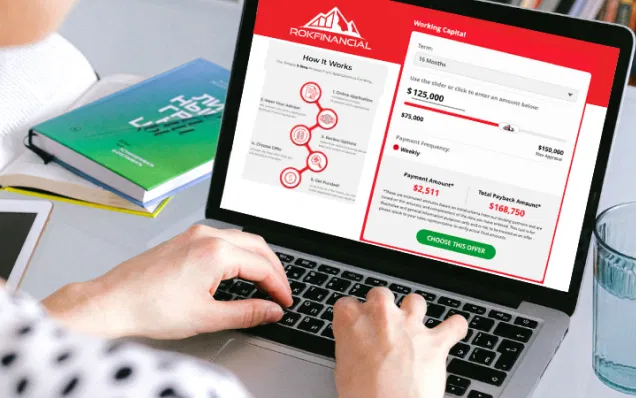
- Transparency: ROK Intelligence and an offer calculator help you review potential terms and payments
- Broad solutions: Working capital, lines of credit, SBA loans, equipment financing, factoring, commercial real estate financing, inventory financing, purchase order financing, and term loans
Explore your options through small business loans and same-day business funding.
The bottom line
The right small business loan should solve a clear business need without creating a new cash-flow headache.
Ask yourself:
- What problem am I solving?
- How much capital do I need?
- How quickly do I need it?
- Which repayment schedule fits my revenue?
- What is the total cost?
- Can I explain the funding plan in one clear sentence?
Then take the next step.
When the timing is right, review your options with FMC through transparent business financing solutions. A little clarity can turn a stressful money moment into a confident business move.
Funding availability, approval, rates, terms, and payment amounts vary by applicant and product. Review all offer details carefully before accepting financing.
Keep exploring