
Invoice Factoring vs. Waiting on Payments: How to Turn Unpaid Invoices Into Working Capital Today

Are unpaid invoices piling up while payroll, fuel, materials, and rent keep moving?
What would your business do with cash from invoices that are already earned: but not yet paid?
For many small business owners, the choice is simple:
- Wait 30, 60, or 90 days.
- Or turn eligible invoices into working capital now.
That second option is invoice factoring. It can help construction companies, staffing agencies, transportation businesses, manufacturers, and professional service firms close cash flow gaps without putting growth on pause.
Here’s how it works, what it costs, and when it may fit your business.
Keep momentum moving
Your credit score isn't your ceiling.
Qualify with as little as 4 months in business and no minimum FICO — compare offers from top financing partners and pick the terms that fit.
See My Real OptionsWhat Is Invoice Factoring?
Invoice factoring is a financing method that converts unpaid business invoices into immediate cash.
You sell eligible invoices to a factoring provider. The provider advances a portion of the invoice value: often within 24 to 48 hours. When your customer pays, the provider sends you the remaining balance minus its fee.
It is generally structured as a sale of accounts receivable rather than a traditional loan.
That means:
- Your unpaid invoices become the funding source.
- Approval may focus heavily on your customers’ creditworthiness.
- You can access cash before your customers’ payment terms expire.
- The provider may manage collections and payment processing.
Think of it as turning yesterday’s completed work into today’s breathing room.
How Invoice Factoring Works: Five Clear Steps
Ready to see the process?
1. Complete the work
You provide products or services to a commercial or government customer.
Then, you issue an invoice with payment terms such as:
- Net 30
- Net 60
- Net 90
2. Submit eligible invoices
You submit one or more unpaid invoices to a factoring provider.
The provider typically reviews:
- Your customer’s payment history
- The customer’s credit strength
- Invoice accuracy
- Whether the work or delivery was completed
- Any disputes, liens, or existing claims
3. Receive an advance
The provider advances a percentage of the invoice: often around 70% to 90%.
For example:
- Invoice value: $25,000
- Advance rate: 80%
- Immediate advance: $20,000
The exact advance rate depends on the provider, industry, customer, invoice terms, and risk.
4. Your customer pays
When the invoice comes due, your customer pays the factoring provider directly.
Depending on the agreement, the provider may handle:
- Payment reminders
- Account reconciliation
- Collections
- Receivables reporting
5. Receive the reserve balance
After your customer pays, you receive the remaining reserve minus the factoring fee.
The result?
Cash arrives earlier. Your business can keep moving. The invoice does not sit quietly in a dusty accounts receivable report.
Invoice Factoring Example
Imagine your manufacturing company sends a $40,000 invoice with 60-day terms.
You need funds now to purchase materials for a new order.
A hypothetical factoring arrangement might look like this:
- Invoice value: $40,000
- Advance rate: 85%
- Initial cash: $34,000
- Factoring fee: 3%, or $1,200
- Remaining reserve: $6,000
- Final reserve payment after the fee: $4,800
- Total received: $38,800
The $1,200 fee is the cost of receiving most of the invoice value before your customer pays.
This is only an illustration. Fees, reserves, advance rates, and contract terms vary. Always review the full agreement, including additional charges and recourse provisions.
What Happens If You Simply Wait?
Waiting costs nothing in direct financing fees.
That can be attractive when:
- Your customers pay reliably.
- Your margins are thin.
- You have enough cash reserves.
- No urgent opportunity is waiting.
- Your current line of credit covers the gap.
But waiting may create indirect costs:
- Delayed payroll
- Missed supplier discounts
- Slower project starts
- More expensive emergency borrowing
- Lost contracts
- Owner stress
- Less time for sales and strategy
The invoice may be profitable on paper. But until the cash arrives, it cannot pay a driver, order steel, cover wages, or fund your next marketing push.
Invoice Factoring vs. Waiting on Payments
| Consideration | Invoice factoring | Waiting for payment |
|---|---|---|
| Cash timing | Often within 24–48 hours after approval and submission | When the customer pays |
| Direct cost | Factoring fee and possible service charges | No financing fee |
| Cash flow | More predictable | Dependent on customer timing |
| Collections | Provider may manage collections | You manage everything |
| Customer contact | Customer may be notified | You remain the only contact |
| Qualification | Often based partly on customer credit | No qualification required |
| Flexibility | Depends on contract terms | Maximum control |
| Best use | Urgent working capital needs | Stable cash reserves and reliable payers |
The key trade-off is clear:
- Waiting preserves every dollar but delays access.
- Factoring costs a percentage but gives you usable cash sooner.
The Biggest Benefits of Invoice Factoring
Could earlier cash make your week feel lighter?
It may help you:
Cover payroll on time
Staffing companies, security firms, and service businesses often pay employees before clients pay invoices.
Factoring can help bridge that awkward gap.
Accept larger projects
A construction company may have the expertise to take on a larger contract: but not enough cash for materials, subcontractors, or labor.
Faster access to receivables can help unlock the opportunity.
Keep trucks and equipment moving
Transportation businesses face constant expenses:
- Fuel
- Repairs
- Insurance
- Maintenance
- Driver wages
Slow-paying freight customers should not automatically bring operations to a halt.
Purchase inventory and materials
Manufacturers, wholesalers, and distributors may need to buy inventory before receiving payment for completed orders.
Working capital from invoices can keep production humming.
Reduce administrative pressure
If the provider handles certain accounts receivable tasks, you may spend less time chasing payments and more time serving customers.
Access funding with a less-than-perfect credit profile
Invoice factoring may be more accessible than some traditional bank products because customer credit and invoice quality can play a major role.
Still, approval is never automatic. Customer disputes, weak payers, unpaid taxes, liens, and incomplete documentation can affect eligibility.

The Potential Drawbacks
Invoice factoring is useful: but it is not magical glitter for every cash flow problem.
Consider these trade-offs:
It can cost more than traditional financing
Factoring fees are commonly quoted as a percentage of invoice value. Depending on risk and payment speed, costs may range widely.
For a low-margin business, even a small percentage can affect profitability.
Compare the fee with the cost of:
- Delaying payroll
- Losing a contract
- Buying supplies at a higher price
- Using expensive emergency credit
- Turning away profitable work
Your customer may know about the arrangement
Many factoring structures require customers to pay the provider directly.
That can affect your customer experience if the provider uses an overly aggressive collections style. Ask how communication will work before signing.
Recourse may shift payment risk back to you
With recourse factoring, you may need to repurchase an invoice if the customer does not pay.
With non-recourse factoring, the provider may assume more nonpayment risk: but the arrangement can cost more and may have important exclusions.
Read the details. Especially the tiny, fussy details.
Contracts may limit flexibility
Some providers require:
- Minimum invoice volume
- Long-term commitments
- Whole-ledger factoring
- Notice periods
- Additional fees
Ask whether you can factor individual invoices or only a broader group of receivables.
Who Is a Good Fit?
Invoice factoring may fit your business if you:
- Invoice commercial or government customers.
- Offer payment terms of 30 days or longer.
- Have customers with reasonable payment histories.
- Need cash for payroll, inventory, fuel, materials, or growth.
- Are growing faster than your cash reserves.
- Want funding that can increase with sales.
- Need an alternative to traditional bank financing.
Common industries include:
- Construction and contracting
- Staffing and recruiting
- Trucking and transportation
- Manufacturing
- Wholesale and distribution
- Medical and healthcare services
- Professional services
- Security and facilities services
It may be a weaker fit if you:
- Collect mostly at the point of sale.
- Serve primarily consumers rather than businesses.
- Have very thin margins.
- Have frequent invoice disputes.
- Need funds for real estate, equipment, or a long-term expansion project rather than receivables.
In those cases, explore alternatives such as working capital loans, a business line of credit, equipment financing, SBA loans, or other small business loans.
How FMC Can Help You Move Faster
Waiting for invoices can make every business decision feel heavier.
FMC offers financing solutions designed to help small business owners access capital for real needs: including accounts receivable and factoring, working capital, lines of credit, equipment financing, purchase order financing, inventory financing, SBA loans, commercial real estate financing, and term loans.
The process is built for speed and clarity:
- Apply online.
- Share basic business information.
- Review available funding options.
- Compare terms and payment details.
- Choose the option that fits your cash flow.
- Receive funds as quickly as possible: potentially within 24 hours, depending on approval and documentation.
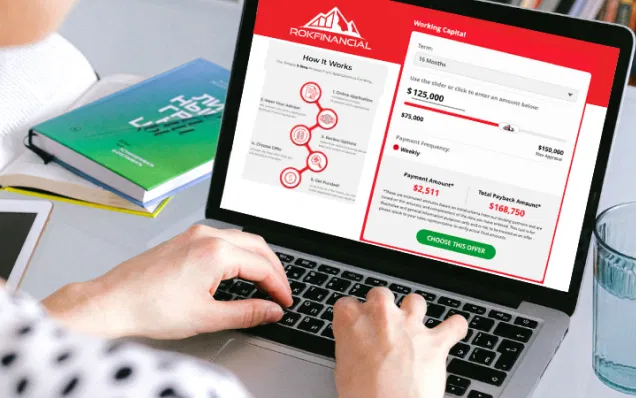
FMC’s fintech-driven underwriting and ROK Intelligence help streamline the process. The offer calculator is designed to make costs and payment expectations easier to understand before you commit.
You may also be able to explore options with as little as four months in business and across diverse credit profiles. Qualification, rates, terms, and funding speed vary by business and product.
A Simple Decision Checklist
Not sure whether to factor or wait?
Ask:
- How many days until my customer realistically pays?
- What expenses must be covered before then?
- What will the factoring fee cost?
- What opportunity could I miss by waiting?
- Are my customers creditworthy and free of payment disputes?
- Will my customers be comfortable paying a third party?
- Is the agreement recourse or non-recourse?
- Are there minimum volumes or long-term commitments?
- Would a working capital loan or line of credit cost less?
- Do I need a one-time bridge or ongoing access to capital?
Then compare the numbers: not just the headline rate.
Turn Cash Flow Stress Into Forward Motion
Your business may be profitable and still feel cash-poor.
That is the frustrating part.
Invoice factoring can help you unlock money already tied up in completed work. It may help you make payroll, accept the next project, restock inventory, repair a vehicle, or finally give yourself a little breathing room.
Waiting can be the right choice when your cash position is strong. But when slow-paying customers are holding your plans hostage, same day business funding and other fast financing options may help you take action sooner.
Ready to explore your options?
Apply for business financing through FMC and see which solution may fit your business needs.

Funding availability, approval requirements, fees, repayment terms, and timing vary by product and applicant. Invoice factoring and other financing products may not be available to every business. Review all agreements carefully and consider advice from your financial, tax, or legal professional before making a decision.
Keep exploring