
Commercial Real Estate Loans: How to Finance the Building Behind Your Business Growth

Could your next growth move start with a key?
A storefront with better visibility.
A warehouse with room to breathe.
A medical office built around your patients.
A restaurant designed for the crowd you have earned.
For established business owners, commercial real estate loans can turn that vision into a long-term asset.
Instead of sending rent into someone else’s investment, you may build equity in a property your business already needs. And with fintech-driven underwriting, flexible credit profiles, and multiple financing options, commercial real estate financing may be more accessible than you expect.
Why buy your business property?
Renting can be flexible. Ownership can be powerful.
Keep momentum moving
Your credit score isn't your ceiling.
Qualify with as little as 4 months in business and no minimum FICO — compare offers from top financing partners and pick the terms that fit.
See My Real OptionsWhen you purchase the building behind your business, you may gain:
Long-term equity
- Build ownership as you repay principal.
- Benefit if the property appreciates.
- Create a valuable business asset.
More control
- Renovate the lobby.
- Expand the warehouse.
- Add treatment rooms.
- Redesign the storefront.
- Stop waiting for a landlord’s approval.
Predictable planning
- Replace uncertain lease renewals with a financing structure.
- Plan improvements around your actual operation.
- Protect the location your customers already know.
Potential rental income
- If appropriate, lease unused space to another business.
- Offset some property expenses.
- Keep your operation in control of the primary space.
Ownership is not automatically better for every business. Property taxes, insurance, maintenance, repairs, and closing costs matter. But if your business is stable and your location supports growth, buying can transform a monthly expense into an equity-building strategy.

What can commercial real estate loans finance?
The right financing depends on your property, business, credit profile, cash flow, and timeline.
Common uses include:
Buying an existing building
- Storefronts
- Offices
- Warehouses
- Restaurants
- Medical practices
- Industrial spaces
Constructing a new property
- Build from the ground up.
- Customize the space around your workflow.
- Create room for future expansion.
Renovating or improving a property
- Upgrade equipment.
- Modernize customer areas.
- Add offices or production space.
- Improve accessibility and efficiency.
Refinancing existing commercial debt
- Restructure a current loan.
- Potentially improve payment terms.
- Access equity for qualified business purposes.
Expanding into a second location
- Add a new service area.
- Increase production capacity.
- Reach a stronger customer market.
Before applying, define the mission. Are you buying for stability, expansion, efficiency, or a little bit of all three?
Main types of commercial real estate financing
Conventional commercial mortgages
Banks and traditional commercial lenders may offer real estate loans for qualified businesses.
These loans often involve:
- A down payment commonly ranging from 20% to 30%
- A property appraisal
- Business and personal financial documentation
- Strong cash flow
- A review of your debt-service capacity
- A personal guarantee in many cases
Terms vary widely. A lender may focus heavily on the property value, your operating history, and whether the business will occupy most of the building.
SBA 504 loans
The SBA 504 loan program provides long-term, fixed-rate financing for major fixed assets.
Eligible uses may include:
- Purchasing an existing building
- Buying land
- Constructing a property
- Renovating a facility
- Purchasing certain long-term equipment
The SBA states that 504 loans can reach up to $5.5 million, with 10-, 20-, and 25-year maturity terms available.
Important note: SBA 504 financing is designed for operating businesses. It cannot be used for speculative or investment rental real estate, working capital, or inventory.
SBA 7(a) loans
An SBA 7(a) loan may support owner-occupied commercial real estate as part of a broader business financing plan.
Depending on the lender and project, funds may help with:
- Buying commercial property
- Renovating a facility
- Refinancing eligible business debt
- Combining real estate needs with other qualified business purposes
SBA eligibility, occupancy, repayment, and documentation requirements apply. Review the details carefully with a qualified lender or advisor.
Alternative and fintech-enabled financing
Traditional financing is not the only path.
Online financing platforms and alternative lenders may help business owners explore:
- Commercial real estate financing
- Working capital
- Lines of credit
- Equipment financing
- Term loans
- Accounts receivable financing
These options may consider more than a single credit score. Revenue, time in business, cash flow, collateral, and the overall health of your operation can all matter.
Can you qualify with imperfect credit?
Worried your credit history will shut the door?
Take a breath.
Commercial real estate lenders still evaluate risk carefully. But a less-than-perfect score does not always end the conversation. Flexible financing providers may consider the full business picture, including:
- Consistent revenue
- Bank deposits
- Time in business
- Existing debt
- Property value
- Down payment
- Business assets
- Industry stability
- Your repayment plan
FMC’s financing process offers options for diverse credit profiles, and the company website states that businesses may qualify with as little as four months in business. No minimum FICO score is required to apply, although specific products and offers have their own requirements.
Explore business loans for bad credit and flexible small business financing, but keep expectations practical: a commercial property loan may require more documentation, stronger cash flow, or additional collateral than short-term financing.
The goal is not to force the wrong product. It is to find the right-sized solution for your property and your business.
What lenders usually review
Ready to make the numbers sparkle?
Gather the basics:
Business tax returns
- Often two to three years, when available.
Personal tax returns
- Commonly requested from owners with significant ownership stakes.
Profit-and-loss statements
- Show current operating performance.
Balance sheets
- Help lenders understand business assets and liabilities.
Bank statements
- Demonstrate revenue deposits and cash flow patterns.
Debt schedule
- List current balances, payments, and lenders.
Property information
- Purchase agreement
- Property address
- Intended use
- Lease details
- Tenant information, if applicable
Business plan or growth outline
- Explain how the property supports revenue, efficiency, or expansion.
Appraisal and inspection materials
- Confirm value and uncover potential property issues.
Lenders may also assess the property’s debt-service coverage ratio, or DSCR. In simple terms: does the business generate enough cash flow to comfortably cover its debt obligations?
A simple path from idea to closing
Commercial real estate financing can feel like a paperwork jungle. Make it manageable.
1. Define the property goal
Choose your mood:
- Steady: Buy the space you already occupy.
- Bold: Expand into a larger facility.
- Fresh: Build a customized location.
- Practical: Refinance and improve cash flow.
- Strategic: Purchase a property with usable extra space.
2. Estimate your total project cost
Look beyond the purchase price.
Include:
- Down payment
- Closing costs
- Appraisal
- Inspections
- Legal fees
- Renovations
- Furniture and equipment
- Insurance
- Initial repairs
- Working capital reserves
3. Compare financing paths
A conventional loan may offer competitive terms for a strong borrower. An SBA option may provide a longer repayment period or lower equity requirement. Alternative financing may offer speed and flexibility when timing or credit is complicated.
Compare:
- Total repayment
- Interest rate or factor rate
- Monthly payment
- Fees
- Prepayment terms
- Collateral requirements
- Funding timeline
- Personal guarantee requirements
4. Apply with organized documentation
A clean application can create a smoother review.
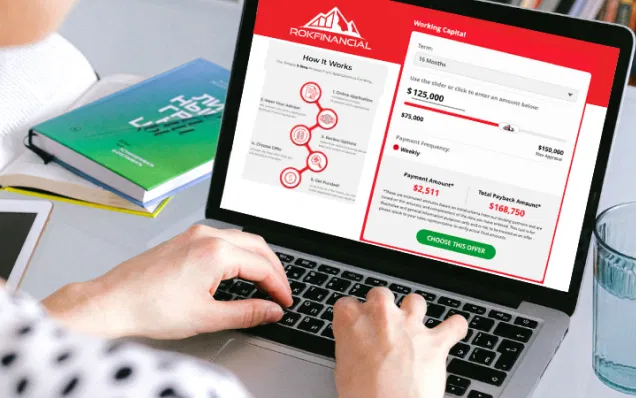
Use technology to your advantage. FMC’s fintech-driven process is designed to streamline underwriting, provide fast pre-approval decisions, and help business owners review multiple options. The company also provides an offer calculator to make payment expectations clearer before you move forward.
5. Review every detail
Fast does not mean rushed.
Read the full agreement. Ask questions about:
- Payment frequency
- Total repayment
- Variable terms
- Default provisions
- Closing costs
- Collateral
- Insurance requirements
- Early payoff conditions

How FMC can help you explore your options
Your property plan may need more than one type of capital.
For example:
- Use commercial real estate financing for the building.
- Add equipment financing for specialized machinery.
- Use working capital for renovations or payroll.
- Consider a line of credit for seasonal expenses.
- Explore accounts receivable financing if invoices are slowing cash flow.
FMC offers a broad financing menu, including commercial real estate, SBA loans, working capital, lines of credit, equipment financing, purchase order financing, inventory financing, accounts receivable financing, residential investment property loans, and term loans.
Start with a quick application and see what may fit your business:
Explore commercial real estate loans and small business financing options
There is no need to guess your next move. Review your options, understand the terms, and choose financing that supports the building: and the business: behind your growth.
Commercial real estate loan checklist
Before you apply, ask:
- Is my business ready to own property?
- Will we occupy most of the building?
- How much can we comfortably put down?
- What will the monthly payment do to cash flow?
- Do we need renovation or equipment funds, too?
- Are our tax returns and financial statements organized?
- Have we compared total repayment: not just the payment?
- What happens if revenue dips?
- Does the property support our five-year growth plan?
If the answers feel encouraging, it may be time to move from “Someday” to “Let’s run the numbers.”
Commercial real estate loans can help you secure more than a building. They can help you create stability, control, and long-term equity for the business you are building.
See what financing options may be available for your business.
Looking for a faster bridge while your bigger growth plan takes shape? Explore a merchant cash advance for sales-based working capital.
Keep exploring